Game of Words: Word Puzzles
- 4.8
- Rating
- 5.00M
- Installs
- Free
- Price
 Analysis by App-foxy
I spent time with Game of Words: Word Puzzles as a light word game, and its appeal is easy to understand: it gives you a quiet way to exercise your vocabulary without demanding the intensity of a timed competition. Developed by DreamLoft, it sits firmly in the casual word-puzzle space, with a presentation aimed at relaxing your mind rather than overwhelming it.
The basic idea works best when you want a short mental break. You can pick it up during a coffee break, while waiting for an appointment, or at the end of the day when a more demanding game feels like work. I found the experience most enjoyable when I treated it as a small daily habit instead of something to rush through.
How the game feels in everyday use
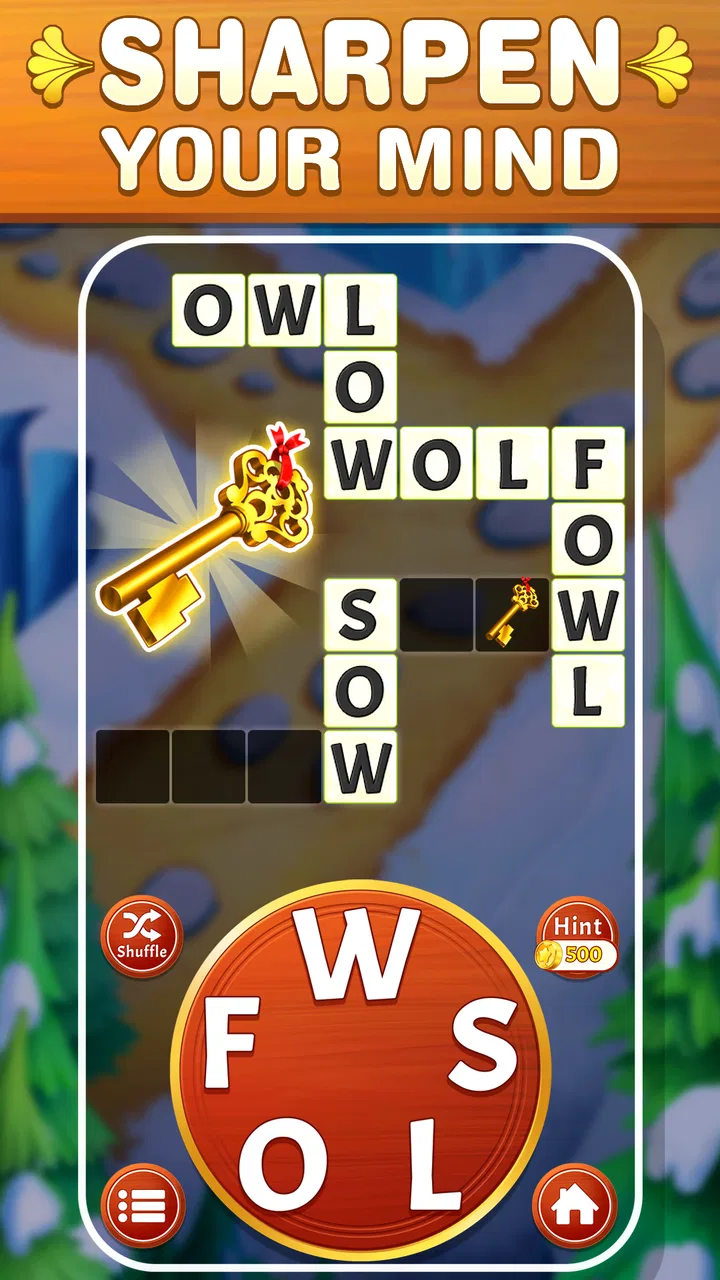
The store summary describes a combination of calming word games and puzzles, and that focus comes through in the overall character of the app. It is a game of words first and foremost, so the attraction depends on whether you enjoy looking for patterns, recognizing possible combinations, and testing your vocabulary one puzzle at a time.
You May Also Like

 Blood Strike: 2.5 Anniversary
Blood Strike’s Loadouts Turn Every Drop Into a Tactical Gamble
A close look at Blood Strike’s custom loadouts: how fast access to signature weapons reshapes its battle royale rhythm, rewards preparation, and narrows the gap between fights.

 Pandora - Music & Podcasts
Pandora’s Music Is Easy to Start, but Harder to Recover
Pandora’s strength is its low-effort path from a seed to a station. Its weak spot is how much confidence it asks you to place in connection, setup, and quiet recovery.

 8 Ball Pool
 Is Built on Rivalries, Rematches, and Routine
A close look at the rivalries, rematches, shared routines, and unanswered safety questions that turn a quick pool match into a persistent mobile community.

 Samsung Music
’s Quiet Strength Is Playing What You Already Own
Its reach comes less from spectacle than from dependable access to a personal library. That simplicity is both the app’s strongest retention engine and its ceiling.

 AccuWeather: Weather Radar
AccuWeather Review: A Quick, Clear Forecast for Everyday Decisions
For everyday plans, the best forecast is the one you can understand quickly. AccuWeather makes rain timing, radar, and local conditions easy to act on, with a few trade-offs.

 Hill Climb Racing
Why Hill Climb Racing Still Turns Crashes Into One More Run
A tiny car, a bumpy hill and one more upgrade: Hill Climb Racing keeps resurfacing because its simple chaos makes every near-miss feel personal.
More From Our News Desk



What I like about this type of design is the low barrier to entry. You do not need to learn a complicated control scheme or understand a large fictional world before starting. The mental challenge is immediately recognizable, which makes it suitable for someone who wants a simple puzzle rather than a long tutorial or a competitive ladder.
That simplicity also creates an important limitation. If you want a word game with a strong story, large social features, or a highly strategic scoring system, this is unlikely to replace those experiences. Its strength is the focused puzzle loop, not variety in every possible direction.
A good fit for short sessions
I found the game particularly practical in situations where I had only a few minutes. For example, imagine finishing lunch early and having a little time before returning to work. A word puzzle gives your attention something structured to do, but it is still easy to put down when the break ends. That makes it more convenient than a game that expects a long uninterrupted session.
The same quality can help at night. A calm word challenge may feel less stimulating than an action game, especially when you want to avoid a noisy or frantic experience. Still, “relaxing” does not mean every puzzle will be effortless. A difficult word arrangement can become surprisingly absorbing, so I would not use it when I need to switch off immediately.
Another useful habit is to play with a deliberate stopping point. Instead of continuing until every puzzle feels easy, I would finish one small goal and leave the rest for later. This keeps the game from turning a restful break into another task to complete.
What the free entry really means
The game is free to download, which makes trying it straightforward. You can see whether its word challenges suit your vocabulary and patience without paying an upfront purchase price. That matters in this category because the central question is personal: some players enjoy gradually working through word puzzles, while others find the format repetitive after a short time.
There are in-app purchases ranging from $0.99 to $69.99 per item. I would therefore treat the free version as an opportunity to evaluate the core experience, not as a promise that every possible convenience or extra will be included without cost. Before buying anything, I would check exactly what the individual purchase offers and whether it improves the part of the game I actually enjoy.
The price range also changes how I judge value. Someone who only wants occasional puzzles can reasonably stay with free access and spend nothing. A committed player may decide that a purchase is worthwhile, but that decision should come after using the game long enough to know whether the puzzle style remains enjoyable. The sensible approach is to avoid making a purchase simply because a difficult moment creates pressure to continue.
In other words, the free starting point is the clearest value proposition here. Paid value depends on the specific item and on how frequently you play. I would not describe the highest-priced option as automatically good value for every player, because the benefit depends on your own usage rather than on the download alone.
Where it stands among word games
Compared with a daily word challenge, this game is better suited to players who want more than one occasional puzzle. A daily format can be satisfying because it creates a clear routine and a shared point of reference, but it can also feel restrictive when you want to keep playing. Game of Words: Word Puzzles is more appealing when you prefer flexible sessions and do not want your progress tied to one daily attempt.
Compared with a crossword app, it offers a more approachable starting point for someone who does not enjoy clues, grids, or lengthy written answers. Crosswords can provide deeper cultural and linguistic challenges, but they also require a particular style of reasoning. This game is a better choice when you prefer working with words in a simpler, more immediately readable puzzle format.
Compared with a competitive multiplayer word game, it should feel less stressful. You are not choosing it for live pressure or for proving your speed against another player. That is a real advantage for relaxed solo play, but it also means competitive players may miss the tension and social motivation that keep them engaged elsewhere.
The comparison is not about one format being universally superior. It comes down to the kind of mental activity you want. For a calm, self-directed word session, this game makes sense. For deep clue solving, social competition, or a fixed daily ritual, another category may serve you better.
Small strategies that make the puzzles more enjoyable
My first practical tip is to separate recognition from guessing. When several letters or word possibilities appear to compete for attention, I found it more useful to scan for familiar endings and beginnings before trying random combinations. This turns the puzzle into a short observation exercise rather than a sequence of taps made without a plan.
A second tip is to keep your personal vocabulary in mind without assuming every puzzle will match your everyday language. If you are stuck, ask yourself whether the arrangement might form a less common word rather than repeating the same familiar answers. This is especially useful for players who are comfortable with ordinary vocabulary but want a gentle reason to notice words they do not use often.
Third, do not measure a relaxing session only by how quickly you finish. Speed can be satisfying, but it can also push you into careless guesses. I preferred slowing down, checking the available possibilities, and treating a difficult puzzle as the main activity rather than an interruption. That approach makes the game feel more like focused unwinding than a test you must pass immediately.
There is also a useful trade-off in playing without outside help. Looking up an answer can keep a session moving, but it removes much of the mental reward. If you want the game to support concentration, I would give yourself a few quiet attempts before searching elsewhere. If you are playing purely for relaxation, using help occasionally may be perfectly reasonable.
Who will get the most from it
This is a strong candidate for casual players who like language but do not want a demanding, feature-heavy game. It can suit someone returning to word puzzles after a long break, a player looking for a quiet alternative to action games, or anyone who enjoys filling small pockets of free time with a focused activity.
It may also work well for families because the content rating is Everyone, although the ideal experience will still depend on each person’s reading ability and preferred difficulty. I would introduce it as a shared puzzle activity rather than assume that every player will enjoy the same word challenges. Younger players may appreciate the simple premise, while adults may enjoy using it as a vocabulary warm-up.
People who value a calm pace are likely to appreciate it more than players who need constant novelty. The game’s appeal comes from repeating a recognizable kind of mental task with different word possibilities. That can be comforting and accessible, but players who quickly lose interest in familiar formats should approach it cautiously.
I would also recommend it to someone who wants a free starting point before deciding whether a word-puzzle app belongs on their phone. The installation base is over five million, and the average rating is 4.8 from around two hundred thousand ratings, which suggests broad interest, but those figures cannot predict whether its particular puzzle style will suit you. Your own first few sessions are more informative than popularity alone.
Who should probably skip it
I would skip this game if your main goal is a rich narrative, elaborate progression, or a highly social experience. The word-puzzle focus is the point, so choosing it while hoping for a completely different type of game will lead to disappointment.
It is also not my first recommendation for players who want advanced crossword construction, specialist vocabulary training, or a serious competitive ranking system. Those needs call for apps designed around deeper clues, formal learning tools, or head-to-head play. A relaxing word game can support attention and vocabulary practice, but it should not be mistaken for a structured course or a professional training method.
Players who dislike repetition should be careful as well. Even a well-presented word game can feel familiar once the basic interaction becomes second nature. The free download makes testing that tolerance easy, so I would use it before considering any purchase.
Device details and long-term practicality
The game runs on Android 7.0 and later, which makes it accessible on a wide range of older and newer Android devices. That is useful if you keep an older phone for casual gaming or do not upgrade frequently. The current version is 1.9.75, so anyone installing it should make sure the device meets that operating-system requirement before expecting to play.
Because this is a word game rather than a graphics-heavy action title, I approached it as something that belongs in the “easy to keep available” part of a phone library. Its practical value is not just the puzzle itself, but the fact that it can fill brief gaps in the day without requiring the commitment of a larger game.
Still, convenience should not be confused with unlimited value. If you rarely play mobile games, even a free download can become unused clutter. I would keep it installed only if I genuinely returned to it for short word sessions. The low entry cost makes experimentation sensible, but your available attention is still the resource that matters most.
My buying judgment
For me, the right decision is to start free and observe how often the puzzles naturally bring me back. If I use it several times a week and enjoy the calm concentration, an individual in-app purchase may be worth considering after checking its exact benefit. If I only open it once in a while, free access is likely enough, and there is no reason to spend simply because the option exists.
The game delivers its best value through accessibility, flexible short sessions, and a word-focused atmosphere that does not depend on competition. Its weaker side is equally clear: players seeking dramatic variety, advanced word study, or multiplayer excitement will probably find better alternatives elsewhere.
My verdict is a qualified recommendation. I would suggest Game of Words: Word Puzzles to a friend who wants a gentle vocabulary-based game for everyday breaks and prefers to try before paying. I would not recommend buying the most expensive option immediately, and I would steer serious crossword fans or competitive word players toward more specialized choices. Install it for the free experience first, then pay only if its particular rhythm genuinely becomes part of your routine.
That is ultimately where this game succeeds. It does not need to be the deepest word title on a phone to be useful. When I want a quiet puzzle, a little focus, and a reason to put distractions aside for a few minutes, its straightforward format makes sense. When I want complexity, social play, or a stronger sense of progression, I know to choose something else.
FAQs for Game of Words: Word Puzzles
01What is Game of Words: Word Puzzles?
Game of Words: Word Puzzles is a casual word game built around solving vocabulary and letter-based challenges. Players form words, complete puzzles, and progress through increasingly demanding levels. It is designed for short play sessions, making it suitable for relaxing at home or keeping your mind occupied while traveling. The difficulty may vary depending on the puzzle and your familiarity with English words.
02How do you play Game of Words: Word Puzzles?
The main gameplay involves examining the letters or clues provided on screen and creating the correct words to solve each puzzle. You generally tap, swipe, or select letters in the required order, depending on the specific challenge. Solving levels allows you to advance, while hints or other assistance may be available when a puzzle becomes difficult. Paying attention to short and uncommon word combinations is often useful.
03Can Game of Words: Word Puzzles be played offline?
Many word-puzzle games support offline play for at least their core levels, but the exact availability can depend on the version installed and the device platform. Some features, such as advertisements, cloud synchronization, daily challenges, leaderboards, or rewards, may require an internet connection. It is best to open the game once while online and check whether the levels you want to play remain accessible without connectivity.
04Is Game of Words: Word Puzzles free to download and play?
Game of Words: Word Puzzles may be available as a free download, allowing users to begin playing without paying upfront. However, free games commonly include advertising, optional in-app purchases, hint packages, or other paid extras. These purchases are not usually necessary to experience the basic gameplay, but they can make difficult puzzles easier or reduce waiting and advertising. Review the store listing and payment settings before downloading.
05Is Game of Words: Word Puzzles suitable for children and English learners?
The game can be a useful choice for children, students, and adults who enjoy vocabulary exercises, provided the language level matches the player’s ability. Word puzzles may encourage spelling, concentration, pattern recognition, and vocabulary development, although the game should not be treated as a complete language-learning course. Parents should also check the age rating, advertising content, privacy information, and in-app purchase controls before allowing younger players to use it.
Pros
- Simple rules make it easy to start playing immediately.
- Short puzzles fit well into quick breaks or daily play sessions.
- Helpful hints can assist when you are stuck on a difficult word.
- Word challenges may support spelling and vocabulary practice.
- Lightweight gameplay is suitable for casual players of different ages.
Cons
- Some puzzles may feel repetitive after extended play.
- Hints or extra content may be limited without in-app purchases.
- Difficulty can vary noticeably between consecutive puzzles.
- An internet connection may be needed for certain features or ads.
- Players seeking competitive multiplayer may find the experience limited.

Game of Words: Word Puzzles
Gallery